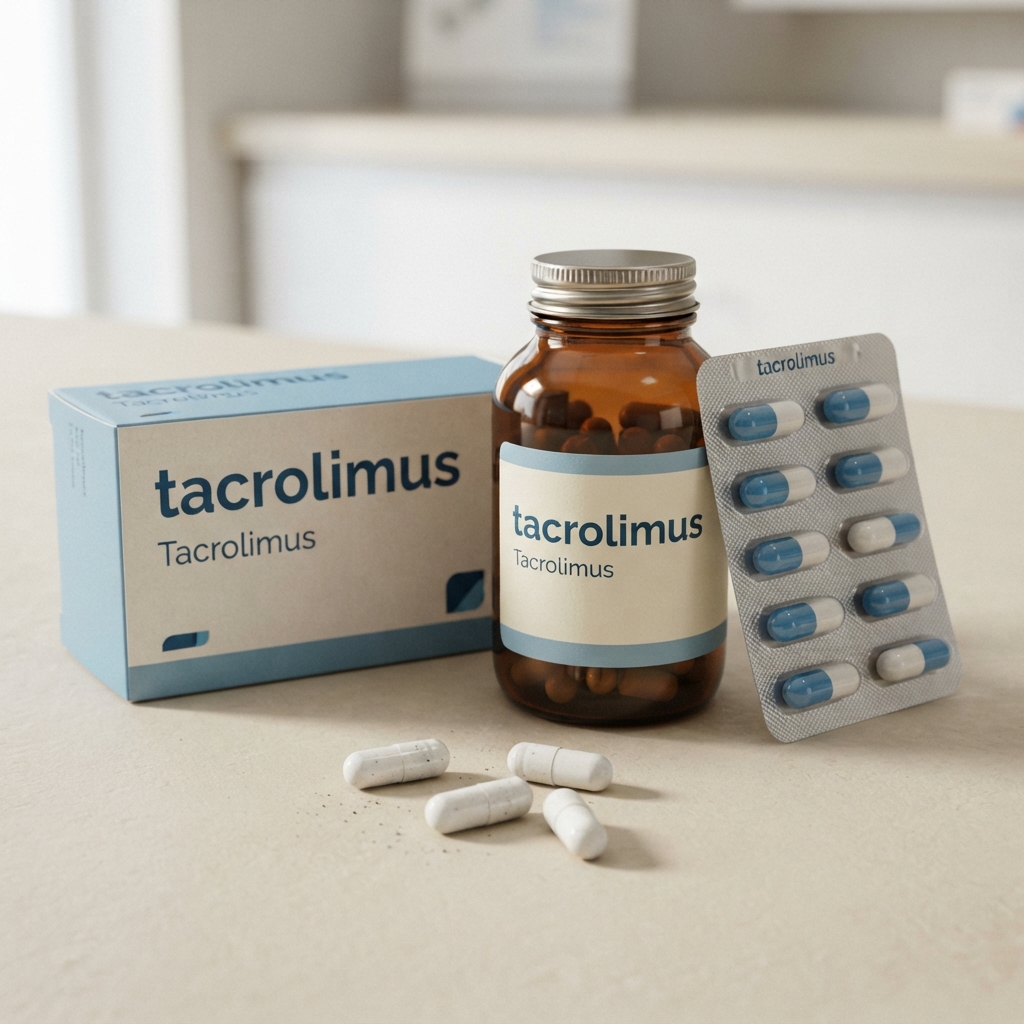
Tacrolimus
$0.65
Tacrolimus is an immunosuppressant used after organ transplants. It lowers the immune response to stop the body from rejecting the new organ.
Drug Information
1 review for Tacrolimus
Tacrolimus is an immunosuppressant used after organ transplants (kidney, liver, heart). It lowers the immune response to stop the body rejecting the new organ.
What is it used for?
- Preventing rejection after kidney, liver or heart transplant
How does it work?
Tacrolimus blocks a protein called calcineurin, which immune cells need to become active. This stops them attacking the transplanted organ.
This information is written in simple words to help you understand this product. It does not replace advice from your doctor or pharmacist.
Read these points before you start. If any of them apply to you, talk to your doctor or pharmacist first.
- This medicine lowers your immune system, so you are more likely to get infections. Tell your doctor straight away if you have a fever or feel unwell.
- Avoid people with chickenpox, shingles or measles if you have not had them. Tell your doctor if you are exposed.
- Do not have live vaccines (such as yellow fever, MMR, BCG or oral typhoid) without your doctor's advice. Other vaccines, like flu and COVID-19, are usually recommended.
- It can raise the risk of some cancers, especially skin cancer. Use sunscreen, cover up and check your skin regularly.
- You will need regular blood tests.
- Tell your doctor if you are pregnant, planning a pregnancy (including men planning to father a child) or breastfeeding.
- Always use the same brand and type. Switching between brands or forms can change blood levels.
- Many medicines and foods change tacrolimus levels, including grapefruit, some antibiotics, antifungals, seizure medicines and St John's wort.
- It can raise blood pressure, blood sugar and potassium, and affect the kidneys.
- Tell your doctor or pharmacist about every other medicine, vitamin or herbal product you use.
- Keep this product out of the reach and sight of children.
Like all medicines, Tacrolimus can cause side effects, but not everybody gets them.
Common side effects
- Shaking (tremor)
- Headache
- Trouble sleeping
- High blood pressure
- High blood sugar
- Diarrhoea or feeling sick
These are usually mild and often get better as your body gets used to it. Tell your doctor if they bother you or do not go away.
Stop using it and get medical help straight away if you notice:
- Fever, chills, sore throat or other signs of infection
- Unusual bruising or bleeding
- Yellowing of the skin or eyes, or dark urine
- New or changing skin spots or lumps
- Signs of rejection: fever, pain over the transplant, less urine
- Confusion, seizures or changes in vision
This is not a complete list. If you notice anything unusual, ask your doctor or pharmacist.
- Take it exactly as your transplant team tells you, usually twice a day, 12 hours apart (or once a day for extended-release).
- Take it on an empty stomach, 1 hour before or 2 to 3 hours after food.
- Swallow the capsules whole with water. Do not open them.
- Go to all your blood tests to check your tacrolimus level.
If you miss a dose: Take it as soon as you remember, unless it is nearly time for your next dose. Never take two doses at once.
If you use too much: Contact your doctor, a poison control centre or your local emergency number straight away, even if you feel fine. Take the pack with you.
How to store it: Keep it in its original pack at room temperature (below 25°C / 77°F), away from heat, damp and direct sunlight. Do not use it after the expiry date.
- QWhy do I need blood tests on Tacrolimus?
- A
To check your blood cells, liver and kidneys, and sometimes the level of medicine in your blood, so any problems can be caught early.
- QCan I have vaccines while taking Tacrolimus?
- A
Most non-live vaccines, like flu and COVID-19, are recommended. Live vaccines should usually be avoided. Always check with your doctor.
- QWhat should I do if I get an infection on Tacrolimus?
- A
Contact your doctor straight away, even for something that seems minor, like a fever or sore throat. Infections can become serious more quickly when your immune system is lowered.
- QCan I eat grapefruit with Tacrolimus?
- A
No. Grapefruit can raise tacrolimus to harmful levels.

Samir Mishra –
I compared a few sites and this one had the better price. Would happily recommend it. Everything was in order when I opened the box.