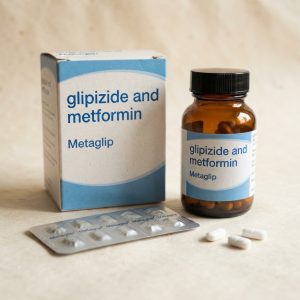
Glyburide + Metformin (Glucovance)
$1.00
Glucovance combines Glyburide and Metformin in one tablet to help control blood sugar in adults with type 2 diabetes.
Drug Information
1 review for Glyburide + Metformin (Glucovance)
Glucovance combines two diabetes medicines in one tablet: glyburide (glibenclamide) and metformin. It is used when one medicine alone has not controlled blood sugar well enough.
What is it used for?
- Type 2 diabetes in adults
How does it work?
Glyburide helps the pancreas release more insulin. Metformin reduces the sugar made by the liver and helps the body respond better to insulin.
This information is written in simple words to help you understand this product. It does not replace advice from your doctor or pharmacist.
Read these points before you start. If any of them apply to you, talk to your doctor or pharmacist first.
- This medicine works best together with healthy eating, regular activity and keeping a healthy weight.
- It is for type 2 diabetes. It is not a replacement for insulin in type 1 diabetes.
- Tell your doctor if you have kidney, liver or heart problems.
- Tell your doctor if you are pregnant, planning a pregnancy or breastfeeding. Insulin is often used instead during pregnancy.
- Alcohol can affect your blood sugar. Drink only small amounts and never on an empty stomach.
- Learn the signs of low blood sugar (shaking, sweating, hunger, fast heartbeat, confusion) and keep sugary sweets or glucose tablets with you.
- This medicine can cause low blood sugar (hypoglycaemia), especially if you skip meals, exercise more than usual, drink alcohol, or are older.
- Do not take it if you have type 1 diabetes or diabetic ketoacidosis.
- Tell your doctor if you have G6PD deficiency, or severe kidney or liver problems.
- Take care when driving. Check your blood sugar before you drive if your doctor advises.
- The metformin in this tablet can rarely cause lactic acidosis. Stop it and tell your doctor if you are very sick with vomiting or diarrhoea, and tell your doctor about any kidney problems or heavy drinking.
- You may need to stop it before a scan with contrast dye or surgery.
- Tell your doctor or pharmacist about every other medicine, vitamin or herbal product you use.
- Keep this product out of the reach and sight of children.
Like all medicines, Glucovance can cause side effects, but not everybody gets them.
Common side effects
- Low blood sugar: shaking, sweating, hunger, headache, fast heartbeat
- Weight gain
- Feeling sick or stomach upset
- Skin more sensitive to sunlight
- Diarrhoea or stomach upset
These are usually mild and often get better as your body gets used to it. Tell your doctor if they bother you or do not go away.
Stop using it and get medical help straight away if you notice:
- Signs of very low blood sugar that do not get better after eating sugar: confusion, drowsiness, fits or passing out
- Signs of an allergic reaction, such as swelling of the face or lips, a severe rash, or trouble breathing
- Fast, deep breathing, severe muscle or stomach pain, feeling very cold or drowsy (possible lactic acidosis)
This is not a complete list. If you notice anything unusual, ask your doctor or pharmacist.
- Take it with meals, usually once or twice a day.
- Swallow the tablet whole with water.
- Your doctor will choose a starting dose based on the medicines you already take.
If you miss a dose: Take it as soon as you remember, unless it is nearly time for your next dose. Never take two doses at once.
If you use too much: Contact your doctor, a poison control centre or your local emergency number straight away, even if you feel fine. Take the pack with you.
How to store it: Keep it in its original pack at room temperature (below 25°C / 77°F), away from heat, damp and direct sunlight. Do not use it after the expiry date.
- QWill I need to take Glucovance forever?
- A
Type 2 diabetes is usually a long-term condition, so most people keep taking their medicine. Healthy changes to diet, activity and weight can sometimes reduce how much you need.
- QHow will I know if Glucovance is working?
- A
Your doctor will check your blood sugar and HbA1c (an average of your blood sugar over about 3 months). Some people also check their sugar at home.
- QWhat should I do if my sugar goes low on Glucovance?
- A
Eat or drink something sugary straight away, such as glucose tablets, fruit juice or sweets. Then have a snack like a sandwich. Tell your doctor if it happens often.

James Huang –
Good, careful packing with no dents or tears. Glad I went with this site for Glucovance. Shipping updates were clear, and the parcel turned up when promised.